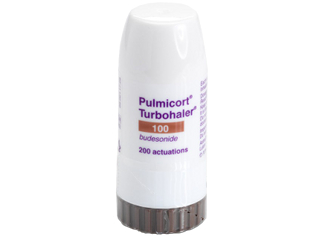
Pulmicort (Budesonide) – Patient Information (UK)
Pulmicort is a brand of budesonide, a medicine used to reduce inflammation in the airways. It is commonly prescribed for long-term control of breathing problems such as asthma and COPD (in selected cases and forms). This page explains how Pulmicort works, when it is used, how to take it, and important safety information for people in the United Kingdom.
Note: Pulmicort is available in different forms (most commonly inhalation/breathing treatments). Always follow the instructions supplied with your particular product and device.
Quick facts
- Active ingredient: Budesonide
- Medicine type: Corticosteroid (inhaled steroid)
- Common uses: Long-term control of asthma; selected uses in COPD depending on formulation
- Main benefit: Reduces airway inflammation to help prevent symptoms and flare-ups
- Key timing point: Works best when used regularly (not for fast, immediate relief)
What is Pulmicort?
Pulmicort contains budesonide, an inhaled corticosteroid. When you breathe it in, it reduces swelling and inflammation in the airways. Over time, this helps to:
- Make airways less reactive to triggers (such as allergens, cold air, or exercise)
- Reduce coughing, wheezing, and shortness of breath
- Lower the risk of asthma attacks or COPD exacerbations (where used)
In the UK, inhaled corticosteroids are widely used in accordance with established clinical guidance (see “UK guidance and context” below).
How Pulmicort works (mechanism of action)
Budesonide belongs to the group of medicines called corticosteroids. Inhaled corticosteroids act mainly in the lungs and airways.
Mechanism of action:
- Reduces inflammatory cell activity in the airway wall
- Decreases the release of inflammatory chemicals (mediators)
- Improves airway responsiveness and helps prevent narrowing of the airways
- Reduces mucus production and airway swelling in the longer term
Important: Pulmicort is designed for control, not rapid relief. For sudden breathing difficulty, you should use a separate reliever inhaler (commonly a short-acting beta-agonist) as directed by your clinician or asthma plan.
Pharmacokinetics (how the body handles it)
Pharmacokinetics describes what happens after you take a medicine—how it is absorbed, broken down, and cleared. For inhaled budesonide, the lungs are the main site of action.
- Absorption: A proportion of the inhaled dose reaches the lungs. Some may deposit in the mouth/throat and be swallowed.
- Distribution: Budesonide is distributed in the body tissues after absorption.
- Metabolism: Budesonide is mainly metabolised in the liver by an enzyme system including CYP3A4.
- Excretion: Metabolites are removed largely via the kidneys (and also through bile/faeces for some components).
- Local effect: The anti-inflammatory effect in the airways contributes to symptom control over days to weeks.
Practical implication: Because budesonide is metabolised in the liver, interactions with medicines that affect CYP3A4 may change blood levels (see “Alcohol and medicine interactions”).
What is Pulmicort used for?
Indications
Depending on the formulation and local prescribing practice, Pulmicort/budesonide inhalation is used for:
- Asthma: For long-term prevention of symptoms and reduction of exacerbations.
- COPD: In selected patients, typically when inhaled steroids are appropriate as part of ongoing management (formulation and local guidance determine suitability).
It is also used in other airway inflammatory conditions in certain settings. If you are unsure whether it is right for you, check the product label or ask your pharmacist.
How to take Pulmicort (timing and technique)
Timing: when should you use it?
- Regular use is important. Budesonide works best when taken consistently.
- It is not an instant reliever. If you need fast symptom relief, use your reliever inhaler as instructed.
- Many people notice improvement within days, but full benefit can take several weeks depending on severity and individual response.
Taking your dose (general guidance)
Because Pulmicort can come in different inhalation forms/devices, follow your specific instruction leaflet. In general:
- Use the correct dose strength for your prescribed regimen.
- Check your technique regularly—poor technique is a common reason for reduced benefit.
- If your device requires it, prime or shake as instructed.
- Breathe in slowly and deeply when your device calls for inhalation technique.
- Hold your breath for a few seconds if your leaflet recommends it.
- Rinse and spit after use (see “Safety profile”): this helps reduce risk of oral thrush and hoarseness.
Tip: If you use a spacer (for metered-dose inhalers), confirm it is compatible with your device and technique.
Dosing (typical adult and child ranges)
Dose depends on the condition, severity, and the specific product formulation and device. Always use the dose and schedule provided with your medicine.
The following table shows commonly used starting/typical ranges for budesonide inhalation in asthma and COPD in clinical practice. Your prescriber may adjust your dose.
| Patient group | Condition | Typical budesonide inhaled dosing approach (examples) | Notes |
|---|---|---|---|
| Adults & adolescents | Asthma (maintenance) | Often once or twice daily depending on product/device; strength may range from low to higher dose based on control | Dose is individual—aim is the lowest effective dose that controls symptoms |
| Children | Asthma (maintenance) | Typically tailored to age and severity; may be once daily or split doses | Ensure correct measurement/technique, and rinse/spit after inhalation |
| Adults | COPD (selected patients) | Inhaled steroid regimens are usually part of combination therapy; dose varies by formulation | Follow local treatment plans and device instructions |
Do not change your dose suddenly without medical advice. If symptoms worsen or you need frequent reliever use, you may need reassessment of your plan.
Food interactions
Inhaled budesonide is delivered mainly to the lungs, so food interactions are generally minimal. However, if some dose is swallowed (for example, due to mouth deposition), there can be small systemic absorption differences.
- Generally: You can take Pulmicort without regard to meals.
- Best practice: Use your dose at the time of day you can reliably remember.
If your clinician has recommended specific timing (e.g., for bedtime control), follow those instructions.
Alcohol and medicine interactions
Alcohol
There is no common direct interaction between inhaled budesonide and occasional alcohol at typical social amounts. However:
- Alcohol can sometimes worsen breathing symptoms in some people (for example by affecting reflux, sleep, or immune responses).
- If you have COPD or severe asthma, consider avoiding or limiting alcohol if it affects your breathing.
Other medicines (important)
Budesonide is metabolised in the liver (including via CYP3A4). Medicines that strongly inhibit CYP3A4 may increase budesonide levels and the risk of side effects.
Possible interaction examples:
- Strong CYP3A4 inhibitors (e.g., some antifungal medicines such as ketoconazole; some HIV medicines boosted with ritonavir; and other strong inhibitors) may raise corticosteroid exposure.
- CYP3A4 inducers (some anticonvulsants and herbal preparations like St John’s wort) may reduce budesonide levels, possibly lowering effectiveness.
Practical advice: If you start, stop, or change dose of another medicine—including herbal supplements—check with your pharmacist. Tell them you use budesonide.
Additional considerations: If you also take oral corticosteroids occasionally, the overall steroid burden may increase—your treatment team may need to review your regimen.
Safety profile: side effects and precautions
Common side effects
- Hoarseness or voice changes
- Oral thrush (thick white patches in the mouth) or mouth fungal infection
- Sore throat or irritation
- Cough after inhalation (sometimes associated with technique)
How to reduce mouth/throat side effects
- Use the correct inhalation technique.
- Rinse your mouth and spit out after each dose.
- Consider using a spacer if your device supports it (spacer use varies by inhaler type).
Less common but important effects
Because budesonide is inhaled, systemic side effects are less likely than with tablets, especially at lower doses. However, risk can increase with higher doses, long duration, or additional steroid exposure.
- Skin bruising or thinning (with long-term steroid exposure)
- Adrenal suppression (rare; more likely with higher doses or switching from oral steroids)
- Eye problems such as glaucoma or cataracts with prolonged steroid use
- Growth effects in children (inhaled steroids may affect growth velocity; regular monitoring is important)
When to seek urgent help
Contact urgent medical services if you experience:
- Severe breathing difficulty that doesn’t improve with your reliever inhaler
- Signs of a severe allergic reaction (e.g., swelling of face/lips, difficulty breathing, rash)
- Severe infections or worsening symptoms
If you develop symptoms of thrush (pain, white patches), speak to your pharmacist or GP—treatment may be needed.
Practical use tips for better results
- Check your technique: consider showing your inhaler technique to a pharmacist, nurse, or GP.
- Take it at the same times each day to improve adherence.
- Don’t stop abruptly: if you’ve been taking it regularly, talk to your healthcare professional before stopping.
- Use reliever as planned: Pulmicort is controller therapy; your reliever treats sudden symptoms.
- Track symptoms: note frequency of reliever use and any night symptoms—this helps adjust treatment.
- Keep devices clean: follow device cleaning instructions to avoid blockages and inconsistent dosing.
- Store correctly: keep the medicine according to the leaflet (typically in a dry place, away from excessive heat).
Alternative options
Depending on your diagnosis, severity, and device preference, alternatives may include other inhaled corticosteroids or combination inhalers.
Common alternative categories
- Other inhaled corticosteroids (e.g., fluticasone, beclometasone) for asthma/COPD control
- Combination inhalers that include an inhaled steroid plus a long-acting bronchodilator for better overall control
- Different delivery devices (nebulised treatments versus inhalers), if appropriate for your needs
Whether an alternative is suitable for you depends on control, side effects, inhaler technique, and personal preference. Ask your pharmacist about options available in the UK.
UK market and legal context (overview)
In the United Kingdom, inhaled corticosteroids such as budesonide are established medicines used widely in respiratory care. They are generally supplied in line with NHS and clinical pathways and may be subject to the specific status of the product and packaging.
Regulatory and quality: Medicines sold in the UK must meet standards for manufacture and labelling set by UK regulatory frameworks. Product availability can vary between brands, pack sizes, and device types.
Guidance use: Treatment choices are influenced by national respiratory guidance and local prescribing frameworks. Asthma management typically uses a stepwise approach, with inhaled corticosteroids forming a cornerstone of control therapy.
Recent guidance and treatment approach (UK)
Respiratory care in the UK generally emphasises:
- Using inhaled corticosteroids for control in appropriate patients to reduce flare-ups
- Regular review of symptoms, inhaler technique, adherence, and triggers
- Stepwise adjustment of treatment to reach the lowest effective dose
- Structured asthma/COPD plans including when to seek medical help
Guidance may evolve over time. Your healthcare professional can confirm the most up-to-date approach for your specific condition and severity.
Delivery and availability in the UK
Availability may depend on the specific Pulmicort presentation (strength and device). Online pharmacies in the UK commonly offer:
- Delivery options such as standard and tracked delivery (timings vary by supplier)
- Batch/expiry checks and secure packaging
- Customer support to confirm the correct strength and device
Before ordering, check:
- The active ingredient (budesonide)
- The strength and formulation
- existing device (if applicable)
FAQ
1) Is Pulmicort a reliever inhaler?
No. Pulmicort (budesonide) is a controller medicine that reduces inflammation. It is not intended for rapid relief of sudden symptoms. Use your separate reliever inhaler/plan for acute breathlessness.
2) How long does Pulmicort take to work?
Some people notice improvement within a few days, but maximum benefit often takes several weeks. If you do not feel it is helping, do not increase the dose on your own—review your technique and treatment plan with a pharmacist or GP.
3) Should I rinse my mouth after using Pulmicort?
Yes. Rinse your mouth and spit out after inhaling. This can help prevent thrush and hoarseness.
4) Can I take Pulmicort with food?
Usually, yes. Food interactions are generally minimal for inhaled budesonide. Use your prescribed schedule consistently.
5) Are there any alcohol interactions?
There is no common direct interaction with occasional alcohol. However, alcohol may worsen breathing symptoms in some people, and if you have severe asthma/COPD, it’s best to limit alcohol if you notice an effect.
6) What medicines can interact with budesonide?
Medicines that affect CYP3A4 metabolism may influence budesonide levels. Examples include certain strong antifungals and some HIV medicines (CYP3A4 inhibitors), or herbal remedies such as St John’s wort (CYP3A4 inducers). Tell your pharmacist about all medicines and supplements you take.
7) What if I miss a dose?
If you miss a dose, take it when you remember unless it is close to your next dose. Do not take extra doses to make up for a missed one. If you are unsure, contact your pharmacist.
8) Can Pulmicort be used in children?
Yes, it can be used in paediatric asthma management depending on the product and the child’s condition. Dosing must be age-appropriate and careful technique is important. Growth monitoring may be recommended for long-term inhaled steroid use.
9) Are there long-term safety concerns?
Inhaled steroids have a lower risk of systemic effects than oral steroids, particularly at appropriate doses. Still, long-term use may carry risks such as oral thrush, voice changes, and—less commonly—systemic effects (especially at higher doses). Regular reviews help ensure the lowest effective dose is used.
10) When should I contact a healthcare professional?
Contact a healthcare professional if you develop:
- Thrush symptoms (painful mouth, white patches)
- Worsening breathlessness or reduced response
- Frequent need for your reliever inhaler
- Concerns about side effects (e.g., vision changes, significant voice changes)
Remember: Pulmicort is most effective when used consistently as part of your overall asthma/COPD plan. If your symptoms change, seek advice rather than adjusting the dose yourself.